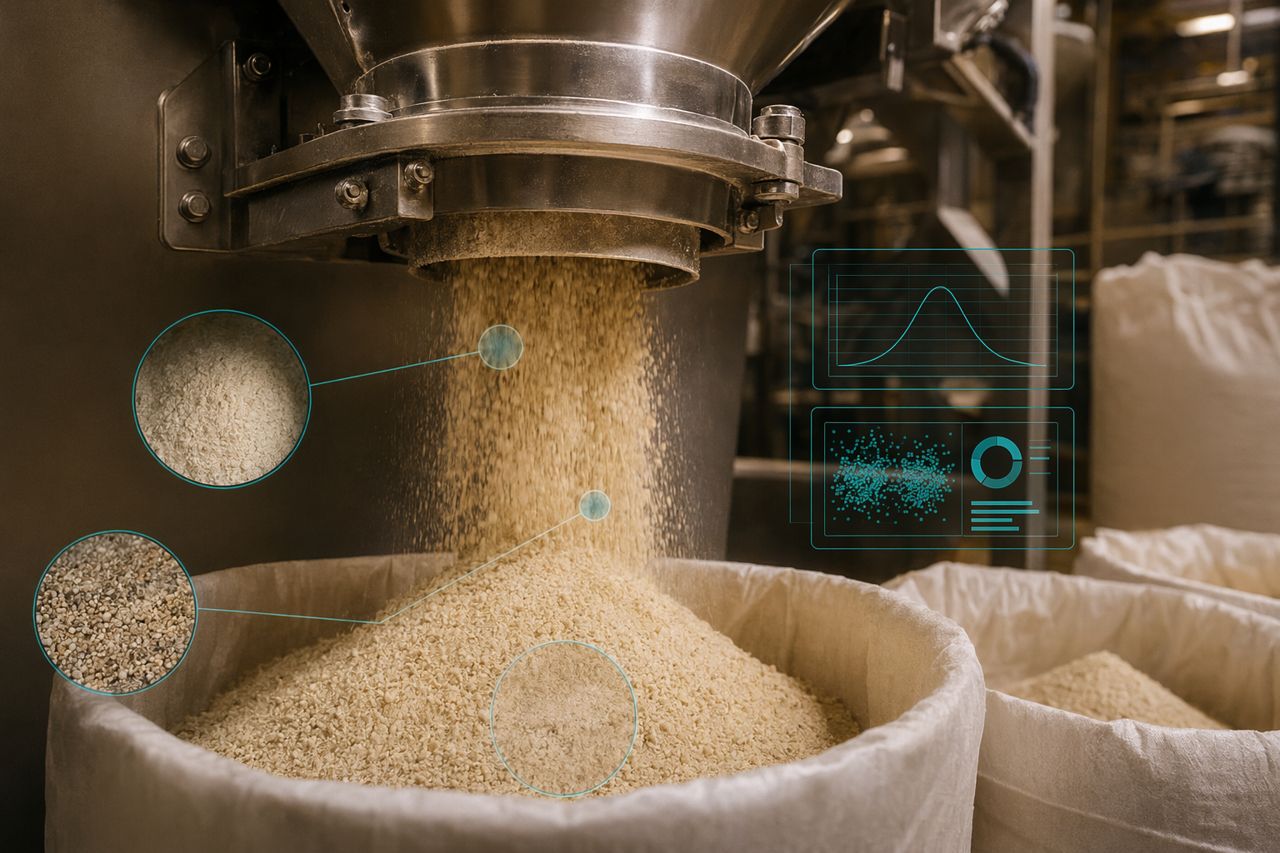
Export premix can leave the plant within specification and still arrive difficult to run if moisture moves through the pack, pallet, or warehouse environment. For bakery premix manufacturers, export packaging is not only a logistics decision. It affects dosing accuracy, flowability, customer-side mixing, dough tolerance, volume consistency, and the reliability of bulk bakery enzymes for premix manufacturers.
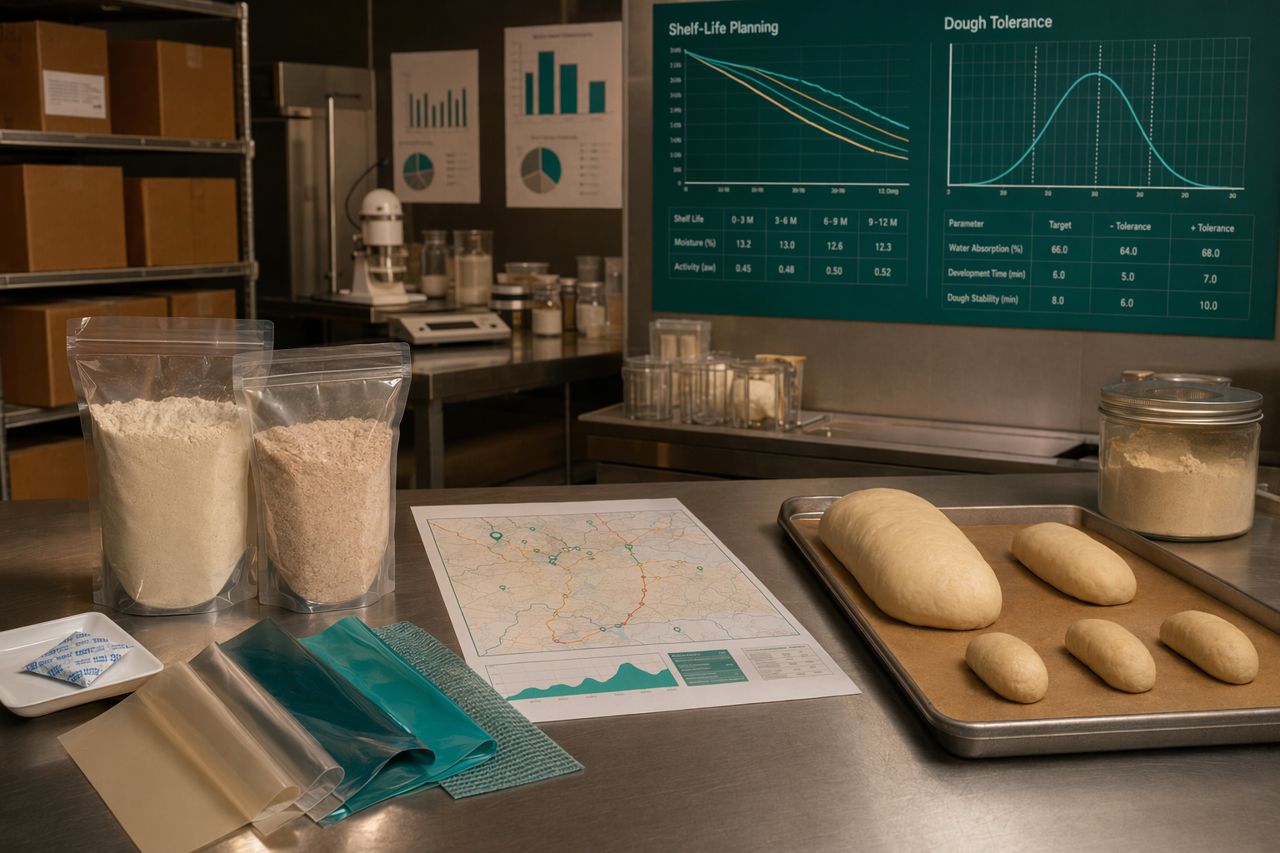
Good shelf-life planning links three teams early: formulation, packaging, and logistics. The target is simple: keep the premix free-flowing, protect sensitive micro-ingredients, and make sure the customer receives a blend that behaves like the approved trial batch.
Why humidity control matters in bakery premix export
Humidity exposure creates more than visible caking. In an export lane, small moisture changes can shift how a premix handles during unloading, dosing, and hydration.
Common commercial impacts include:
- Slower discharge from bags, totes, or hoppers
- Higher risk of lumps during customer mixing
- Uneven distribution of low-dose functional ingredients
- Reduced confidence in shelf-life claims
- More warehouse holds, complaints, and replacement shipments
- Inconsistent dough strength, gas retention, and bake volume at the end user
For premix manufacturers selling across climates, packaging must be treated as part of the product design rather than a final purchasing step.
The three moisture paths to control
1. Moisture through the package
Paper sacks, woven bags, liners, cartons, and bulk bags all manage moisture differently. The right structure depends on the blend, the route, and the expected dwell time in port, warehouse, and customer storage.
Packaging questions to settle before export launch:
- Does the barrier match humid ports and non-climate-controlled warehouses?
- Is the liner compatible with fine powders and microgranules?
- Can the seal survive compression, vibration, and handling?
- Does the bag format prevent corner leakage after pallet movement?
- Is the closure repeatable at production speed?
A pack that performs in a dry domestic warehouse may not be suitable for tropical transit or long customer-side inventory rotation.
2. Moisture trapped inside the pack
Packaging can only protect what is packed correctly. If warm premix is filled too soon after blending, if bags are closed with humid air inside, or if pallets are wrapped before temperature equalization, moisture can condense inside the unit load.
Practical controls include:
- Letting hot process areas and cool storage areas equalize before wrapping
- Avoiding pack-out beside open dock doors during humid weather
- Keeping liners cleanly seated before filling
- Maintaining consistent fill weight and headspace
- Checking seal integrity during shift changes and packaging roll changes
The goal is to prevent each bag from becoming its own small humidity chamber.
3. Moisture from warehousing and freight
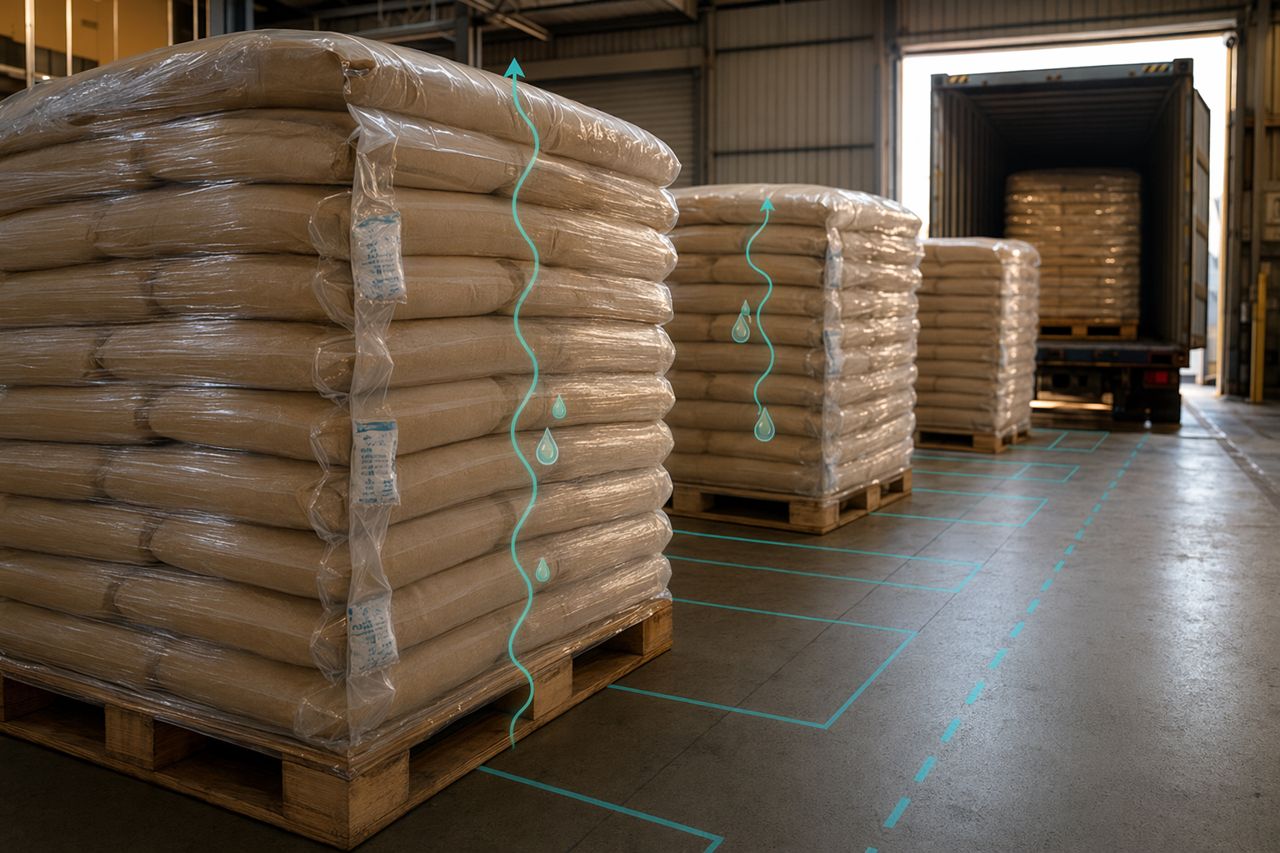
The export supply chain adds variables that formulation teams do not always see: container sweat, wet pallets, open dock staging, mixed loads, damaged stretch wrap, and long dwell time near warm exterior walls.
High-risk warehouse conditions include:
- Pallets staged directly on damp floors
- Containers loaded after rain exposure
- Bags stored near open doors, wash areas, or chilled zones
- Mixed freight with wet goods or high-moisture cargo
- Long hold periods without rotation discipline
- Re-stacking that breaks compression patterns or damages liners
A shelf-life plan should define acceptable handling conditions in language that warehouse and freight partners can actually follow.
Desiccants: useful, but not a substitute for package design
Desiccants can support export stability, especially where container humidity is difficult to control. However, they should not be used to cover a weak barrier, poor sealing, or inconsistent pack-out.
For premix applications, decide:
- Whether desiccants belong inside secondary packaging or in the container space
- How they are prevented from direct contact with food-contact powder
- Where they sit relative to airflow, pallet wrap, and container walls
- How placement is documented for repeatable loading
- How customers identify and remove any non-product components safely
The best programs treat desiccants as one layer in a moisture-control system, alongside packaging, loading, pallet protection, and warehouse instructions.
Shelf-life planning for enzyme-containing premixes
Enzymes are selected for performance in dough systems, but they must also survive real premix handling. For bakery premix manufacturers, the key issue is not only whether an enzyme blend is technically suitable. It is whether the full premix remains practical after shipping, storage, opening, and dosing.
When building an export premix with enzymes, align these variables early:
- Flour base and native variability
- Sugar, salt, emulsifier, oxidant, and reducing-agent profile
- Particle size and segregation risk
- Moisture sensitivity of the full formula
- Pack format, seal type, and pallet pattern
- Target storage duration before customer use
- Expected climate across the shipping route
DoughVector supports formulation teams with enzyme systems designed for industrial premix realities: blend uniformity, handling tolerance, and performance consistency from plant trial to customer production.
Packaging specification points technical buyers should request
When comparing packaging suppliers, go beyond material cost per bag. Ask for evidence that the structure supports the route and handling model.
Useful specification points include:
- Moisture barrier suitability for the target export lane
- Seal type and closure repeatability at line speed
- Resistance to puncture during palletizing and container loading
- Liner fit for fine powder flow and low dust entrapment
- Pallet compression behavior during stacking
- Compatibility with automated filling and checkweighing
- Print and label durability in humid storage
- Food-contact compliance for the intended markets
Packaging that reduces customer complaints, rework, and emergency replacement stock often pays back faster than a lower-cost sack.
Warehouse handling checklist for export premix
Use a short, visible handling standard that is easy for warehouse operators and freight partners to execute.
Recommended controls:
- Store pallets off the floor and away from exterior walls
- Keep stretch wrap intact until controlled customer receiving
- Avoid staging near open dock doors during rain or high humidity
- Do not load premix with wet, chilled, or odor-heavy cargo
- Inspect containers for dryness before loading
- Use clean, dry pallets with no visible dampness
- Maintain first-in, first-out rotation by production batch
- Document damaged bags, rewrapped pallets, and container exceptions
- Keep retain samples mapped to production batch and shipping lane
The handling standard should be written for operational clarity, not only for audit language.
How formulation and packaging decisions interact
A robust export premix is built by matching the formula to the package. If the blend contains highly moisture-sensitive components, very fine powders, or low-dose functional ingredients, the packaging specification may need to move up. If the target market requires long warehouse dwell time, the enzyme system and carrier strategy should be reviewed alongside the bag structure.
Better alignment can deliver:
- More consistent customer-side dosing
- Fewer hard lumps and bag-bottom rejects
- Lower complaint rates after sea freight
- Cleaner unloading and hopper transfer
- More stable dough handling across the stated shelf life
- Better confidence when scaling from trial batches to export volumes
This is where enzyme selection becomes a manufacturing decision, not just a formulation note.
When to review your export packaging program
Review the full system when any of the following changes occur:
- New export market or shipping lane
- Longer customer shelf-life requirement
- New bag, liner, tote, or carton structure
- Higher inclusion of enzyme blends or other functional micro-ingredients
- Change in warehouse provider or freight forwarder
- Customer reports caking, slow discharge, or inconsistent dough behavior
- Seasonal complaint pattern in humid months
Small packaging or logistics changes can create formulation symptoms at the customer mixer. A cross-functional review helps identify the true source before reformulation costs escalate.
DoughVector perspective
DoughVector works with bakery premix manufacturers that need enzyme systems to perform reliably inside real industrial constraints: high-throughput blending, export packaging, variable flour bases, and customer production lines that expect repeatable results.
If you are developing or improving bulk bakery enzymes for premix manufacturers, share your product type, pack format, shipping route, and target shelf life. We can help match the enzyme blend to the way your premix is actually produced, shipped, stored, and used.
Request a quote: Use the on-site request form to send your premix application, annual volume range, packaging format, and destination markets. DoughVector will respond with a practical quote path for your formulation and export handling requirements.