Enzyme for Bread Improver Premix: Sourcing Guide for Ingredient Factories
For bakery premix manufacturers, an enzyme is not a catalog item. It is a functional input that must disperse evenly, stay stable in a dry blend, and deliver repeatable dough behavior once your customer adds water, yeast, and process variation.
DoughVector supplies bulk bakery enzymes for premix manufacturers building bread improver, flour correction, soft-roll, pan bread, frozen dough, and high-speed bakery systems. Our focus is practical: dependable blend handling, predictable performance windows, and sourcing support that fits ingredient factory workflows.
Why bread improver premix needs a different enzyme sourcing approach
A bread improver factory has different priorities than a test bakery. The enzyme must perform in the final dough, but it must also behave well before baking:
- Uniform distribution in dry premix without hot spots or segregation
- Compatibility with flour, starch, emulsifiers, oxidants, reducing agents, minerals, fibers, and carriers
- Low-dust handling options for cleaner batching and reduced airborne loss
- Stable performance through storage and regional transport conditions
- Lot-to-lot consistency that protects finished premix specifications
- Documentation support for technical, quality, and regulatory review
The right enzyme system helps your customers see better loaf volume, dough tolerance, crumb structure, softness, machinability, and bake consistency without forcing your plant to manage unstable or difficult-to-blend inputs.
Enzyme functions commonly used in bread improver premix
| Enzyme type | Typical role in bread improver | Buyer value for premix manufacturers | Formulation notes |
|---|---|---|---|
| Fungal amylase | Supports fermentation response, crust color, and oven spring | Helps deliver volume and consistent bake response across flour variation | Often used as a core component in bread improver systems |
| Maltogenic amylase | Supports softness and shelf-life perception | Helps customers maintain softer crumb over time | Useful in packaged bread and soft-roll systems |
| Xylanase | Improves dough handling, gas retention, and loaf volume | Increases tolerance in industrial mixing and proofing | Selection should match flour quality and water absorption targets |
| Lipase | Supports dough strength, crumb structure, and emulsification effect | Can reduce reliance on certain emulsifier systems depending on label and region | Works best when matched to fat, flour, and process conditions |
| Glucose oxidase | Builds dough strength and process tolerance | Useful for high-speed lines and weak flour correction | Requires careful balancing to avoid excessive tightening |
| Protease | Relaxes dough and improves extensibility | Supports crackers, flatbread, laminated or specific extensibility-driven systems | Not a default choice for pan bread improvers; use with clear process goals |
What to specify before buying bulk enzyme ingredients
1. Your bread improver position
Start with the market promise your premix must deliver. The enzyme package for an economy volume improver is different from one designed for softness, frozen dough resilience, clean-label support, or high-speed bakery tolerance.
Useful targets include:
- Volume lift and symmetry
- Dough extensibility or strength
- Mixing tolerance
- Proofing tolerance
- Crumb softness over shelf life
- Reduced gumminess or tighter slicing behavior
- Performance in weak, variable, or high-ash flour
- Compatibility with emulsifier-reduction strategies where permitted
2. The dry blend environment
Enzymes in bread improver premix live inside a physical system. Particle size, carrier type, bulk density, humidity exposure, and blending sequence all affect consistency.
DoughVector can support enzyme options suited for:
- Ribbon blender and paddle mixer workflows
- Micro-ingredient premix staging
- Flour-based and starch-based carriers
- Mineral-rich improver systems
- Sachet, bag, and bulk pack formats
- Low-dust or controlled-dispersion requirements
3. Customer flour and process variation
A bread improver is often expected to correct what the bakery cannot fully control. If your customers use variable wheat sources, fast mixing, short fermentation, frozen dough, or high-speed pan lines, the enzyme blend should be selected for tolerance, not just peak lab performance.
Key questions:
- Is the target bakery using sponge, straight dough, no-time dough, or frozen dough?
- Is the flour generally strong, weak, variable, or region-specific?
- Is the bread sold fresh, packaged, chilled, or frozen?
- Is softness, volume, machinability, or label position the main value driver?
Premix manufacturing concerns we help control
Blend homogeneity
Enzyme ingredients are typically used at low inclusion levels, so uniform distribution matters. DoughVector supports sourcing choices that align with your carrier system and mixing method to reduce concentration pockets and finished bag variation.
Dust and operator handling
Dust is not only a housekeeping issue. It can affect dosing accuracy, ingredient loss, and operator comfort. Low-dust formats and controlled particle profiles can improve plant-floor handling in micro-ingredient areas.
Storage stability
Dry premix may sit in warehouse, container, distributor, or customer inventory before use. Enzyme selection should consider moisture exposure, packaging barrier, local climate, and expected turnover.
Formula compatibility
Bread improver formulas often combine enzymes with ascorbic acid, emulsifiers, minerals, yeast nutrients, starches, fibers, oxidizing or reducing systems, and anti-caking agents. We help screen enzyme options for practical compatibility in the dry blend and in dough performance.
Commercial repeatability
Technical buyers need more than a sample that works once. They need supply continuity, repeatable finished premix behavior, and a clear path from evaluation to production ordering.
Common bread improver premix applications
Pan bread improver
Target outcomes: volume, fine crumb, sliceability, softness, and tolerance during mixing and proofing.
Typical enzyme direction: amylase, xylanase, lipase, glucose oxidase, and softness-supporting systems depending on the label and performance target.
Soft roll and bun improver
Target outcomes: softness, roundness, resilience after packing, and consistent bite.
Typical enzyme direction: balanced amylase and lipid-modifying support with dough-strength control.
Frozen dough improver
Target outcomes: freeze-thaw resilience, gas retention, and reduced collapse after thawing and proofing.
Typical enzyme direction: dough-strength and tolerance systems matched with emulsifiers and cryo-stability strategy.
High-speed bakery improver
Target outcomes: strong machinability, short process tolerance, controlled stickiness, and consistent oven response.
Typical enzyme direction: xylanase and oxidative support balanced carefully to avoid over-tight dough.
Flour correction premix
Target outcomes: consistent flour performance across crop, mill, or region variation.
Typical enzyme direction: targeted amylase and hemicellulose support selected around flour profile and bakery process.
Sourcing checklist for technical buyers
Before requesting a quote, prepare the information that determines the most suitable enzyme recommendation:
- Premix type and target bread application
- Current improver formula or functional ingredient list
- Desired claim or customer value proposition
- Base carrier and approximate inclusion level in the final premix
- Mixing equipment and batch size range
- Packaging format and expected storage conditions
- Target markets and documentation requirements
- Trial scale, production timeline, and forecasted purchasing volume
If the formula is confidential, share the functional role of each component instead of exact percentages. DoughVector can still recommend a practical enzyme direction for evaluation.
How DoughVector supports evaluation
DoughVector works with formulation managers, sourcing teams, and plant technical staff to narrow enzyme choices before production trials. Our support is built around the way premix factories actually operate:
- Application review: bread type, flour variability, process limits, and target customer claim
- Premix fit check: carrier, dust preference, blending method, storage, and pack format
- Candidate recommendation: single enzyme or tailored blend direction for bench and pilot trials
- Trial interpretation: dough handling, loaf volume, crumb, softness, and processing tolerance review
- Commercial quote path: bulk supply option aligned to production planning and documentation needs
Faceless explainer video
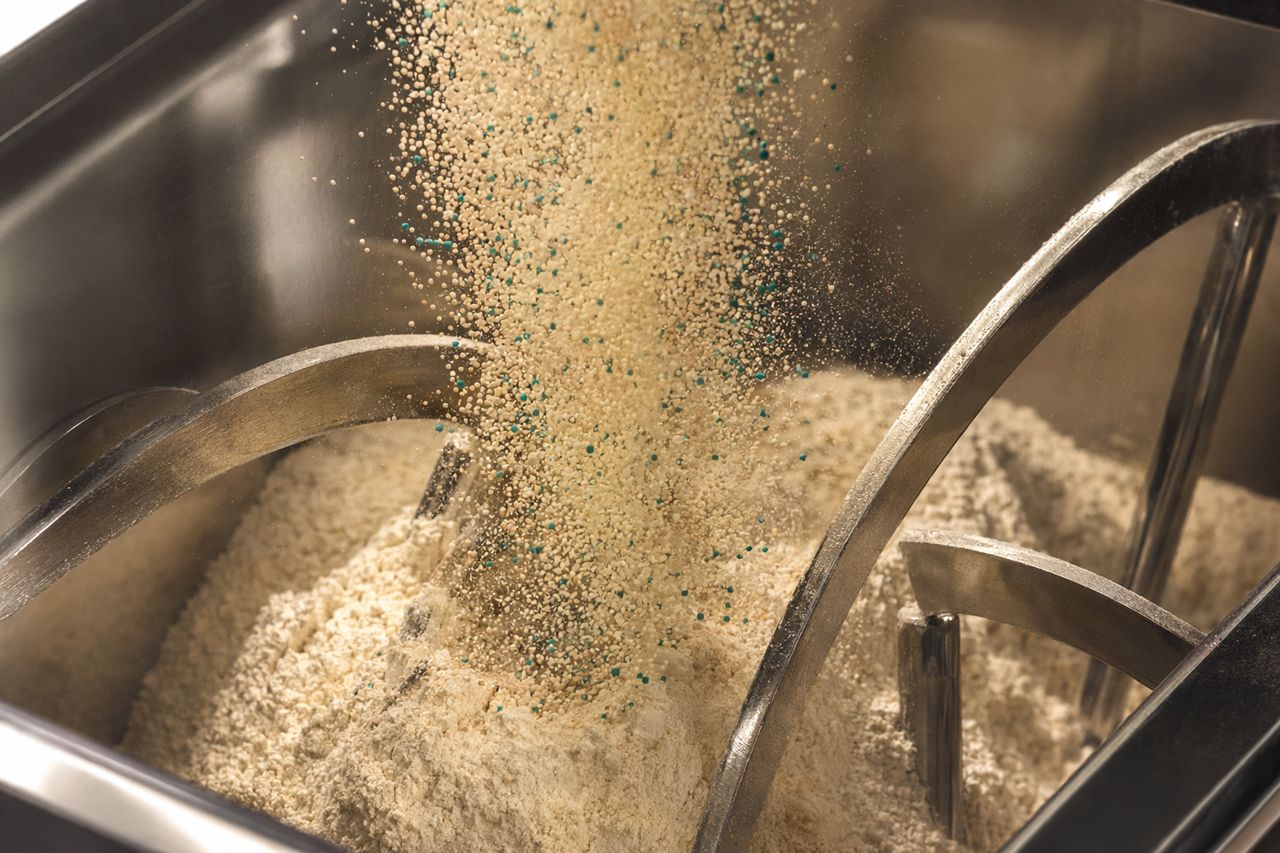
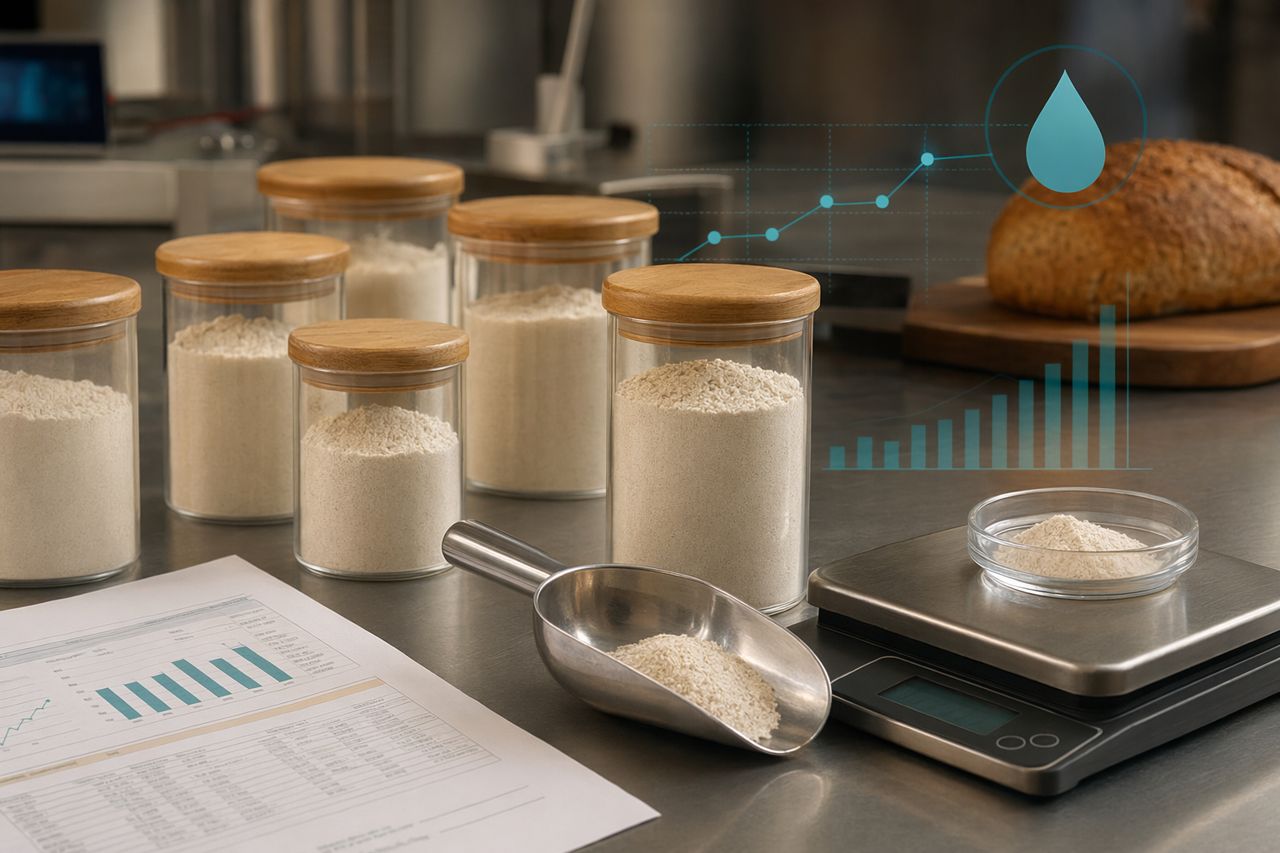
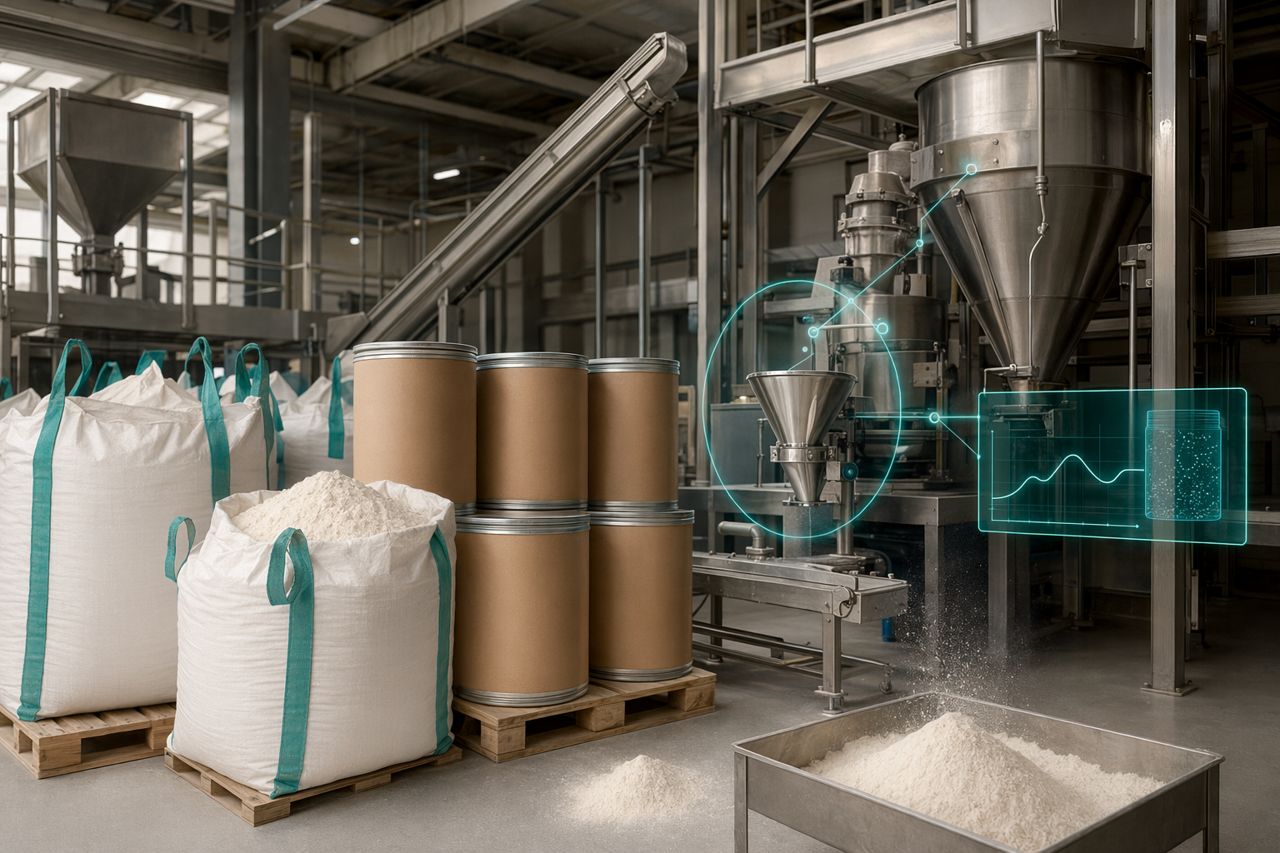
This page includes a one-minute faceless explainer showing premix powder in motion, enzyme-dose pulses entering a ribbon blender, and teal overlays for hydration curve, dough tolerance, volume lift, and batch consistency. It is designed for technical buyers who want to understand the sourcing logic quickly before sending a quote request.
Request a quote for bread improver enzyme sourcing
If you manufacture bread improver premix and need a bulk enzyme package for consistent dry blending and predictable bakery performance, send your requirements through the on-site form.
Use the form to share your premix type, target bread application, carrier system, desired performance outcome, region, and estimated production volume.